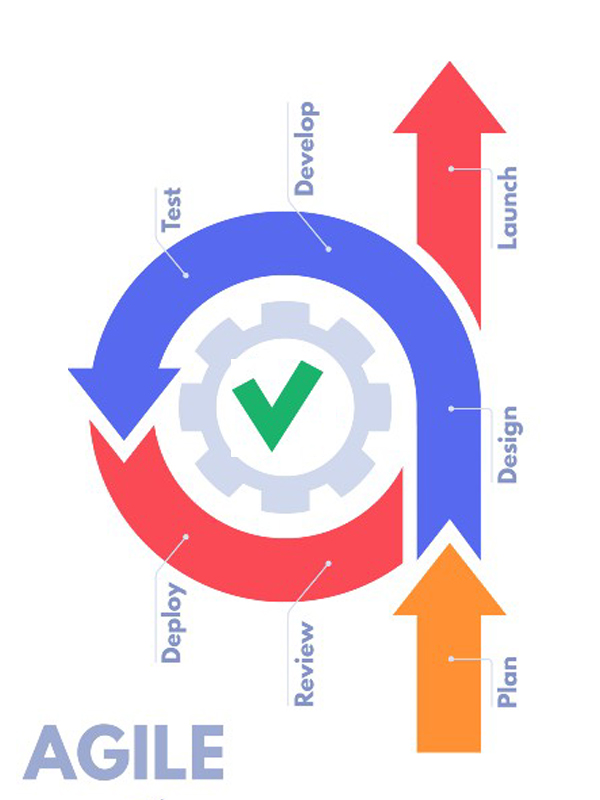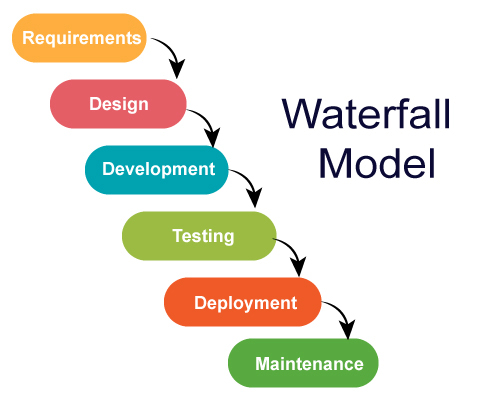

Our company use iterative and incremental work processes based on continuous feedback and adaptation. This contrasts with the rigid, sequential phases of traditional "waterfall" project management. The core process is supported by specific methodologies like Scrum, Kanban, and Extreme Programming.
The principles of iterative development, emphasizing customer collaboration, responding to change, delivering working software frequently, and self-organizing teams.
We prioritize constant communication with clients to ensure the final product meets their evolving needs. This collaboration, often facilitated by a Product Owner, ensures the team builds what the customer truly values, rather than what was initially contracted.
Instead of a single, large project, work is broken down into small, manageable cycles called iterations or "sprints," typically lasting 1 to 4 weeks. At the end of each cycle, the team produces a potentially shippable increment of the product and gathers feedback for the next iteration.
Working software is delivered early and frequently throughout the project life cycle, not just at the end. This allows stakeholders to see tangible progress and provide continuous feedback that is incorporated into future iterations.
At the end of each iteration, the team holds a "retrospective" meeting to reflect on what went well, what didn't, and what can be improved for the next cycle. This practice drives constant refinement of both the product and the team's processes.
Agile processes are adaptive rather than predictive. Plans are flexible and can be adjusted in response to changing requirements, new information, or customer feedback. The focus is on embracing change to gain a competitive advantage.